

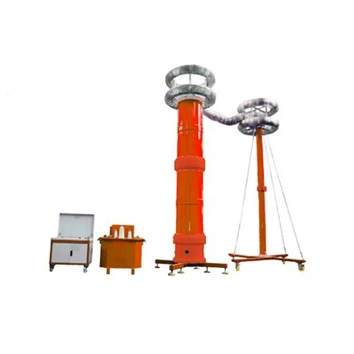
HUAYI: Professional Resonance Test System Manufacturer
Wuhan HUAYI Electric Power Technology Co.,Ltd. (HUAYI for short) is a professional manufacturer in China, researching and manufacturing electric testing equipment. HUAYI insist developing and marketing independently, and make efforts to improve the products quality, reduce cost, and improve efficiency.




Why Choose Us
Rich Experience
The company was established in 2005 and has more than ten years of professional experience. It is one of the earliest manufacturers of high-voltage testers in China.
Professional Technology Support
Specialize in testing and solutions for more than 18 years. Own experienced engineers. Professional on delivery, installation, debugging, and training.
ISO Certification
We have a professional R&D technical team and strict quality control to ensure safety, accuracy and efficiency. Passed ISO9001 certification and obtained relevant patent certificates.
24 hours After-sales
Professional after-sales service, paying attention to customers' feedback about products; Providing solutions within 24 hours, if the customers have any problem; Act quickly and efficiently.
Product Parameter
|
Temperature |
-10℃~40℃ |
|
Relative humidity |
≤95%, no condensation |
|
Altitude |
≤3000 meter |
|
Input Power |
Three phase 380V, Frequency 50Hz or single phase 220V |
|
Output frequency |
20-300Hz |
|
Voltage waveform |
Sine Wave, waveform distortion rate<1.0% |
|
Working time |
Continuous working time 60min under rated load, overvoltage 1.1 times, 1minute |
|
Temperature Rise |
Continuous working time 60min under rated load, temperature rise≤65K |
|
Quality Factor |
Q≥30(f=45Hz) |
|
Measurement Accuracy |
System Effective value 1.5 |
|
Frequency regulation sensitivity |
0.1Hz |
|
Degree of instability |
<0.05% |
|
Rated output voltage |
0 ~ 1000kV and below |

Energy Efficiency: Operating at resonance allows the system to produce high voltages with minimal power input.
Safety: The system can limit fault currents, reducing the risk of damage to the test object.
Precision: It offers precise control over test voltage and frequency, leading to accurate results.
Portability: Modern systems are often portable, making them suitable for field testing.
Application of Resonance Test System
Transformer Testing
Resonance test systems are ideal for performing dielectric strength tests on transformer insulation. By applying this voltage to the transformer’s insulation, the test system helps determine whether the insulation can handle high-stress scenarios, such as short circuits or overvoltage conditions.
Cable Testing
Resonance test systems are commonly used to test the dielectric strength of cable insulation, ensuring that the cables can withstand the high-voltage environments of a power station. The test system applies high voltage to the cable insulation, simulating real-world conditions.
Circuit Breaker and Switchgear Testing
Resonance test systems are used to test the dielectric strength of switchgear and circuit breakers. The system applies high voltage to the equipment and ensures that it can handle the stresses of high-voltage operations.
Generator Testing
Resonance test systems help test the insulation resistance of generators, ensuring that they can withstand high-stress operating conditions. By measuring the voltage and current, the test system can determine if the insulation is functioning correctly.
High Voltage Busbar Testing
Resonance test systems are an excellent tool for testing the dielectric strength of busbar insulation. The resonance test system can also simulate short-circuit conditions to assess the busbar’s performance during extreme stress.
Resistance Testing for Substations
The resonance test system applies high-voltage AC to the equipment in the substation. By monitoring the current and voltage, the test system can detect weaknesses or faults in the insulation, ensuring that the equipment is safe and reliable.
Key Components of an Resonant Test System
An Resonant test system typically consists of the following components:
Power Source
Supplies the necessary power to the system.
01
Variable Inductor/Capacitor
Allows tuning to achieve resonance.
02
Resonant Circuit
Where the magic happens—this circuit is where the inductive and capacitive elements are balanced.
03
Voltage Regulator
Ensures that the output voltage remains stable and within desired limits.
04
Measurement Instrumentation
Critical for monitoring voltage, current, and other parameters during the test.
05


Series Resonance Test System vs. Traditional Testing Methods
|
Factor |
Series Resonance Systems |
Traditional Methods (e.g., Power Frequency Tests) |
|
Power Supply Size |
1/30–1/60 of test capacity |
Requires full - capacity supply |
|
Waveform Quality |
Pure sine wave (low distortion) |
Risk of harmonics from bulky transformers |
|
Mobility |
Portable, field - deployable |
Heavy, fixed installations |
|
Test Accuracy |
High (supports PD measurement) |
Limited by external noise |
|
Energy Consumption |
Low (resonance reduces losses) |
High |
Proper Grounding: Ensure all equipment is properly grounded before conducting tests.
Personal Protective Equipment (PPE): Always wear insulated gloves, safety boots, and face shields to protect against electrical shock and arc flash.
Test Area Isolation: Keep the test area clear of unauthorized personnel. Use barriers and signage to prevent accidents.
Proper Calibration: Ensure that the test equipment is regularly calibrated and maintained to ensure accuracy and safety.

How To Cooperate With Us
Inquiry: You can contact us online or sending us an inquiry. Please provide the details of your requirements as clear as possible. So we can send you the offer at the first time.
Phone Number: (+86)-18062012971/whatsapp:+8618064115448
E-mail: sales@sinohipot.com/ tina@sinohipot.com
Custom Plan Development: During the consultation, we’ll evaluate your specific requirements and together, craft a custom quality assurance plan tailored to your needs.
Agreement and Setup: Once you’re satisfied with the plan, we’ll finalize the details and set up everything needed to get started.
Quality Assurance Implementation: Our team will then implement the quality assurance protocols on your selected products or processes.
Delivery: Deliver cargos by sea or by air according to requirement.
Packaging and Delivery
|
Packing detail: |
Packing with wooden cases, provide different solutions of shipping way. |
|
Payment: |
We accept many payment term, such as T/T, Western Union, L/C. |
|
Warranty period: |
One-year warranty, Installation, and commissioning of specific products. |
|
Delivery time: |
Most of our products are in stock and can be delivered upon payment. The delivery time usually does not exceed 15 days. |

Our Certificates

As one of the most professional resonance test system manufacturers and suppliers in China, we're featured by quality products and competitive price. Please rest assured to buy cheap resonance test system made in China here from our factory.
Resonance Test System, GIS AC withstand test kit, ac resonance test system