

HUAYI: Professional Insulation Resistance Tester Manufacturer
Wuhan HUAYI Electric Power Technology Co.,Ltd. (HUAYI for short) is a professional manufacturer in China, researching and manufacturing electric testing equipment. HUAYI insist developing and marketing independently, and make efforts to improve the products quality, reduce cost, and improve efficiency.
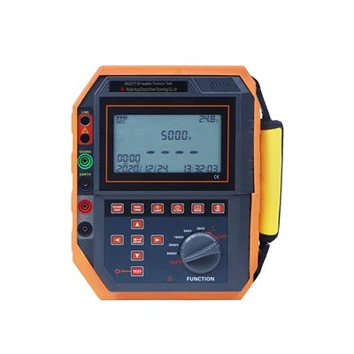
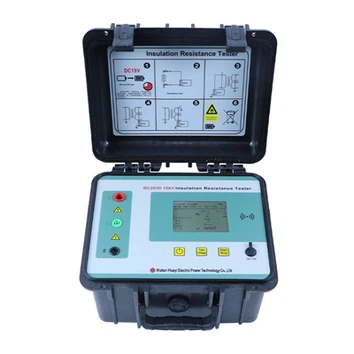
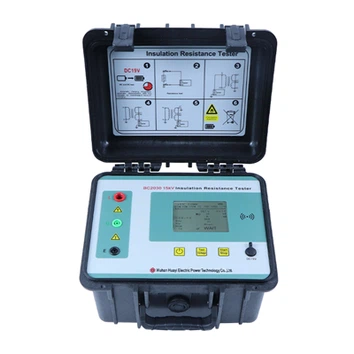
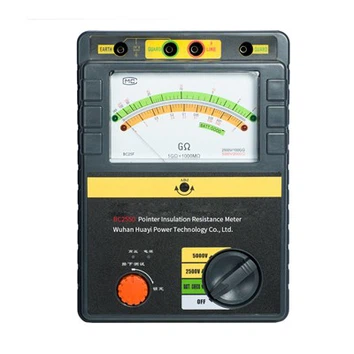
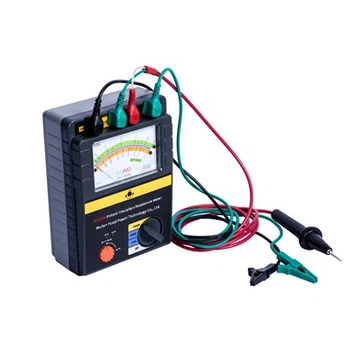
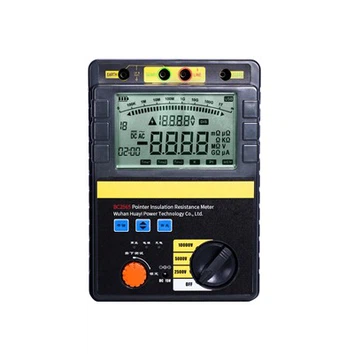
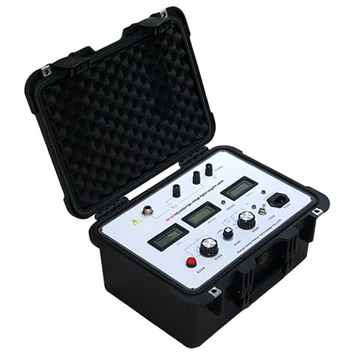
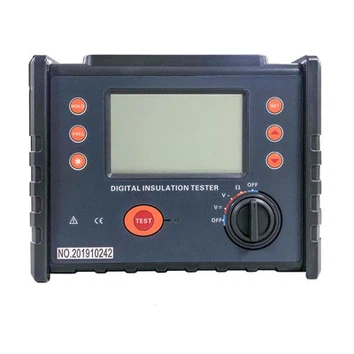
Why Choose Us
Rich Experience
The company was established in 2005 and has more than ten years of professional experience. It is one of the earliest manufacturers of high-voltage testers in China.
Professional Technology Support
Specialize in testing and solutions for more than 18 years. Own experienced engineers. Professional on delivery, installation, debugging, and training.
ISO Certification
We have a professional R&D technical team and strict quality control to ensure safety, accuracy and efficiency. Passed ISO9001 certification and obtained relevant patent certificates.
24 hours After-sales
Professional after-sales service, paying attention to customers' feedback about products; Providing solutions within 24 hours, if the customers have any problem; Act quickly and efficiently.
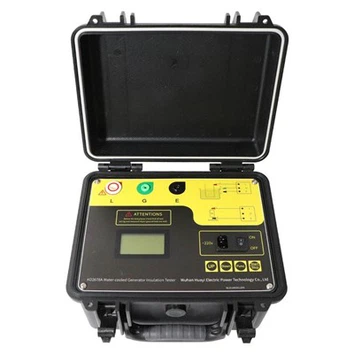
Product Parameter
|
Model |
BC2533 |
|||
|
Output voltage |
500V DC |
1000V DC |
2500V DC |
|
|
Accuracy |
Temperature |
23℃±5℃ |
||
|
Insulation resistance |
1MΩ~25GΩ ±5% |
2MΩ~40GΩ ±5% |
5MΩ~100GΩ ±5% |
|
|
Output voltage |
4MΩ~25GΩ 0~+10% |
8MΩ~40GΩ 0~+10% |
25MΩ~100GΩ 0~+10% |
|
|
HV short-circuit current |
≥1mA |
|||
|
Power supply |
8 AA batteries (8 AA rechargeable batteries, external charger) |
|||
|
Work environment |
Temperature:-10℃~40℃ |
|||
|
Relative humidity: ≤85 % |
||||
|
Storage environment |
Temperature: -25℃~60℃ |
|||
|
Relative humidity: ≤90 % |
||||
|
Insulation performance |
When the voltage between the circuit and the shell body is 1000V DC, the maximum resistance is 2500MΩ. |
|||
|
Withstand voltage properties |
When the voltage between the circuit and shell body is 2500V DC, the withstand voltage time is 1 minute. |
|||
|
Dimension |
230×190×90mm (L×W×H) |
|||
|
Weight |
2kg |
|||
|
Accessory |
A set test line, the instrument manual, the certificate |
|||
Advantages of Insulation Resistance Tester
Safe and Reliable
An insulation resistance tester measures the resistance that insulation materials offer against the flow of electric current. By conducting regular Insulation Resistance tests, engineers can identify potential issues before they escalate, thereby ensuring that systems remain safe and operational.
Data Logging and Analysis
Many modern insulation resistance testers offer data logging and analysis capabilities. This allows for the recording of test results over time, facilitating trend analysis and data-driven decision-making.
Easy to Operate
The operation of an insulation resistance tester is straightforward, making it accessible for technicians of varying experience levels. To use the device, a technician connects the tester to the equipment being assessed and selects the appropriate test voltage.
Compact and Portable
Modern insulation resistance testers are designed to be compact and portable. This versatility is particularly beneficial for organizations that require mobility in their testing processes, allowing technicians to perform tests on-site or in controlled environments.

Power Systems: Detecting the insulation condition of transformers, generators, motors, and cables to prevent electrical accidents caused by insulation failures.
Buildings and Facilities: Checking the electrical systems of buildings to ensure the insulation performance of electrical lines and equipment meets safety standards.
Industrial Equipment: Evaluating and maintaining the insulation condition of various industrial equipment to prevent equipment failures and downtime.
Communication Systems: Detecting the insulation condition of communication equipment and lines to ensure their normal operation.
Although both instruments measure resistance, their design and purpose are very different:
Test Voltage Is Too Low
Multimeter: Uses about 0.3–3V for resistance measurement.
Insulation Tester: Applies 500V, 1000V, or higher.
Without high voltage, many defects cannot be revealed.
Measurement Range Is Too Small
Multimeter: Limited to about 10–20 MΩ.
Insulation Tester: Reads up to GΩ levels.
Most insulation tests require ranges far beyond a multimeter’s capability.
No Time-Based Diagnostics
Multimeters give a single static reading.
IR testers provide time series data for DAR/PI, crucial for detecting subtle problems.
Safety Limitations
IR testers safely discharge residual charge from large capacitive loads (motors, cables).
Multimeters lack discharge circuits—using them on high-capacitance systems can be dangerous.

Safety Precautions Should
Safety is paramount when using a tester. Always ensure that the equipment under test is de-energized and properly grounded before commencing the test. Wear the appropriate personal protective equipment (PPE), such as insulated gloves and safety glasses. The tester should also be handled according to the manufacturer's guidelines to avoid accidents or damage. Lastly, be mindful of the high voltages involved during the test and ensure that no one else is near the equipment being tested.
How To Cooperate With Us
Inquiry: You can contact us online or sending us an inquiry. Please provide the details of your requirements as clear as possible. So we can send you the offer at the first time.
Phone Number: (+86)-18062012971/whatsapp:+8618064115448
E-mail: sales@sinohipot.com/ tina@sinohipot.com
Custom Plan Development: During the consultation, we’ll evaluate your specific requirements and together, craft a custom quality assurance plan tailored to your needs.
Agreement and Setup: Once you’re satisfied with the plan, we’ll finalize the details and set up everything needed to get started.
Quality Assurance Implementation: Our team will then implement the quality assurance protocols on your selected products or processes.
Delivery: Deliver cargos by sea or by air according to requirement.
Packaging and Delivery
|
Packing detail: |
Packing with wooden cases, provide different solutions of shipping way. |
|
Payment: |
We accept many payment term, such as T/T, Western Union, L/C. |
|
Warranty period: |
One-year warranty, Installation, and commissioning of specific products. |
|
Delivery time: |
Most of our products are in stock and can be delivered upon payment. The delivery time usually does not exceed 15 days. |

Our Certificates

As one of the most professional insulation resistance tester manufacturers and suppliers in China, we're featured by quality products and competitive price. Please rest assured to buy cheap insulation resistance tester made in China here from our factory.
insulation resistance test of generator, Resistance Tester, motor insulation resistance