

FAQ 1
Q: What is the "Triple Diagnostic" approach for MV cables, and why is a single test not enough?
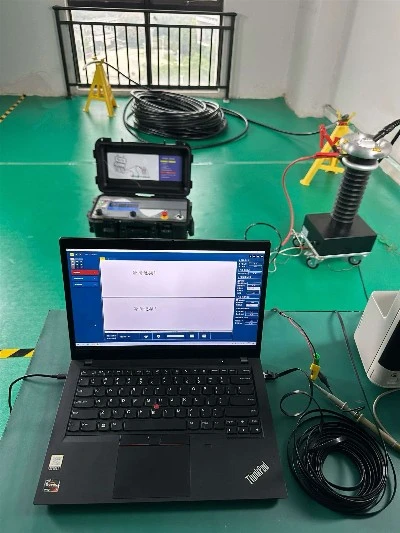
Answer: Medium voltage (MV) distribution cables-typically rated from 6 kV to 35 kV-are buried, spliced, and operated for decades, so insulation degradation is unavoidable. No single measurement reveals the whole picture: a VLF withstand test proves dielectric strength, a Tan Delta (dissipation factor) measurement grades the bulk condition of the insulation, and a Partial Discharge survey pinpoints discrete defects. The "Triple Diagnostic" approach combines all three complementary methods to move from a simple pass/fail verdict to a genuine condition assessment. This is the foundation of Condition-Based Maintenance (CBM): instead of replacing cables on a fixed calendar, engineers intervene only when the diagnostic data shows the asset is actually degrading.
FAQ 2
Q: What does VLF (Very Low Frequency) withstand testing reveal, and why is 0.1 Hz used instead of DC?
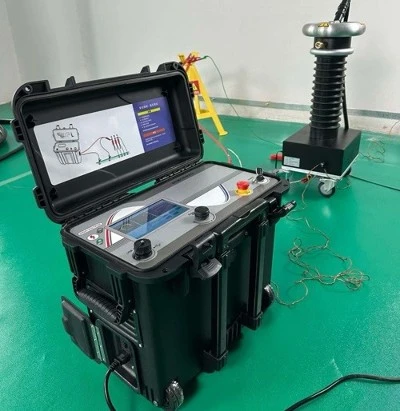
Answer: Very Low Frequency testing applies an AC sinusoidal voltage at 0.1 Hz (per IEEE 400.2) for a defined hold period-commonly 15 to 60 minutes at 2–3 U₀-to prove that the cable can survive an overvoltage stress without breakdown. It screens out gross defects such as Water Trees, voids, and severe mechanical damage that have not yet progressed to failure. The low frequency is chosen deliberately: DC testing is now discouraged because it leaves trapped Space Charge inside XLPE insulation, which can trigger a failure after the test is complete. A 0.1 Hz AC waveform reverses polarity slowly enough to limit the reactive power demand, yet still stresses the insulation in a way that is representative of service conditions.
FAQ 3
Q: What is Partial Discharge (PD) testing, and how does it localize defects in MV cables?
Answer: Partial Discharge is a localized, incomplete breakdown that does not bridge the insulation between conductors; left unchecked, it erodes the insulation from the inside until a full failure occurs. PD testing-typically performed under a VLF or power-frequency source using the IEC 60270 method with Phase-Resolved Partial Discharge (PRPD) analysis-detects, locates, and characterizes these weak points years before they cause an outage. Key defect types include voids, delamination, protrusions, floating electrodes, and defective joints or terminations. The magnitude (in pC), the inception and extinction voltage, and the shape of the PRPD pattern together identify both the location and the physical nature of the defect, pointing a repair crew to the exact splice or section that needs attention rather than condemning the whole circuit.