

At what measured value should I stop trending and start planning an outage?
There is no universal pass/fail figure, because apparent charge depends on winding capacitance, sensor placement and machine size. Action limits must be built from a baseline on the same machine and from a family of similar machines.
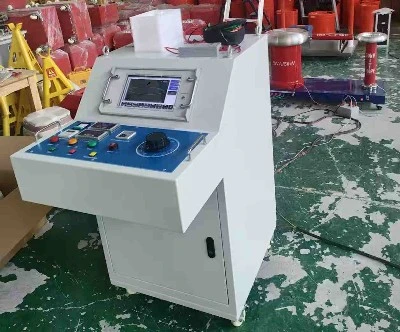
1. Starting reference for offline tests: A clean, dry, well-impregnated winding commonly reads below 100 pC at 1.0 U0. Readings of 100–500 pC warrant investigation and shorter test intervals; above 500 pC, or roughly ten times the commissioning baseline, plan an inspection at the next opportunity; above 1000 pC, or any rapidly rising trend, treat the winding as at risk and schedule endwinding inspection or a rewind assessment.
2. Online trending: Set an alarm at twice the established baseline and a trip-level alert at ten times, then confirm with an offline test before committing to an outage. Load and temperature corrections must be applied, otherwise daily cycling will generate false alarms.
3. PDIV and RPDIV: For inverter-fed (Type I) windings, the inception and extinction voltages relative to the drive overvoltage are more informative than absolute charge - if PDIV sits below the repetitive impulse peak, the insulation is being eroded on every switching event.
4. Condition-Based Maintenance: The workflow is: commissioning baseline offline, quarterly online scans, annual offline verification, and intervention triggered by trend rather than by calendar. This converts PD data into a ranked outage list and avoids both unnecessary rewinds and unplanned failures.
5. Record the conditions: Every reading must carry voltage, load, winding temperature, humidity and sensor type, or it cannot be compared with the next one.